
Why artificial intelligence can support recipes – but neither refines them, secures them, nor makes them consistently scalable.
Our assessment at Cookbutler
Artificial intelligence (AI) has fundamentally changed the world of cooking recipes in recent years. AI recipes, automatically generated preparations, AI-based nutritional estimates, and supposedly personalized nutrition suggestions are now available with just a few clicks and appear efficient, scalable, and cost-effective at first glance.
However, our daily work at Cookbutler reveals a more nuanced picture. We operate precisely at the intersection where recipes are not just content, but productive, licensable, and legally relevant content – for example, for health and fitness apps, medical applications, insurance companies, food brands, or kitchen appliance manufacturers.
It quickly becomes clear:
AI is a valuable tool, but no substitute for genuine content, medical responsibility, robust data models, and legally as well as technically compliant scaling. Anyone who wants to use AI recipes professionally needs to understand precisely where AI can provide support – and where its structural limitations lie.
1. Where AI Recipes Can Be Effectively Supported
To realistically assess AI, it’s worth first looking at its strengths. When used correctly, artificial intelligence can accelerate processes and support creative work – especially in the early or accompanying phases of recipe development.
1.1 Inspiration & Variation
AI particularly shines in the brainstorming phase. AI recipes are well-suited as a starting point for new concepts or variations of existing dishes. Typical applications include:
- Brainstorming new dishes and flavor combinations
- Variations of existing recipes (e.g., vegetarian, seasonal, simplified)
- Rewriting language
- Making basic adjustments at the household level (e.g., lactose-free or reduced meat)
As a creative sparring partner, AI can accelerate processes here – not as a finished recipe author, but as a source of inspiration.
1.2 Editorial & Operational Support
We also use AI strategically in editorial and operational processes. Especially with larger recipe catalogs, AI can help streamline recurring tasks, such as:
- Textual standardization, as well as shortening or expanding recipes
- Translations into other languages
- Internal structure and tagging suggestions
- Drafts for descriptions, SEO, or teaser texts
The crucial point here is the context:
AI recipes are an accelerator, not a definitive source of information. Every AI output at Cookbutler is professionally reviewed, validated, and curated. We don’t work with simple, unstructured prompting, but with clearly defined workflows, verification mechanisms, and a comprehensive technical architecture into which AI is specifically integrated.
2. Where AI Recipes Reach Structural Limits
As compelling as the advantages are in certain areas, AI fundamentally reaches its limits in professional, especially medical and commercial, applications. It is precisely here that the AI hype is often short-sighted.
2.1 AI-generated prescriptions cannot be refined to be medically consistent
A widespread misconception is the assumption that AI can reliably supplement prescriptions with medical or therapeutic information. The reality is considerably more complex.
Medical nutritional recommendations are:
- indication-dependent and highly complex (e.g., diabetes, kidney disease, cardiovascular risks)
- bound to current guidelines
- must be structured consistently, logically by exclusion, and tailored to specific target groups
AI does not operate medically in this context, but rather probabilistically. Typical characteristics of AI-generated prescriptions are:
- estimating instead of validating (hallucinations)
- combining based on mathematical probabilities instead of deriving medically
- no liability
- no responsibility
The conclusion is clear:
A medically inconsistent AI prescription is not a quality defect, but a risk – and potentially dangerous. Liability and responsibility cannot be automated. Humans will never be able to be replaced by AI in this area.
2.2 Medical and nutritional data are licensed – not freely available
Another key point is often underestimated in connection with AI recipes: the data basis.
Relevant medical and nutritional information – such as:
- validated nutrient databases
- medical dietary logics
- therapy recommendations
- indication-specific limits
is subject to fees, licensing agreements, and clearly regulated by law.
AI cannot legally reproduce or reliably derive this information because it:
- is not part of publicly available training data
- is not dynamically updated
- is not contextually validated
- is often subject to intellectual property
Scaling without licensed data is not a scaling solution, but a legal risk. Even if AI recipes seem inexpensive at first glance, they are not, legally or structurally.
2.3 AI Recipes Cannot Verify Culinary Reality
Recipes are more than just text – they are applied experiential knowledge. This is precisely where AI reaches an insurmountable limit.
An AI:
- has never cooked
- cannot assess texture, doneness, taste, or other sensory qualities
- does not recognize practical errors in the process
- does not understand kitchen dynamics
- does not test preparation steps
Therefore, Cookbutler consistently adheres to the following principle:
Our recipes are developed, cooked, tested, and verified by humans. This is the only way to create content that works in practice, is reproducible, and meets professional standards.
2.4 AI recipes cannot be scaled consistently
For us and our customers, this is one of the most important qualitative arguments for long-term growth. Scaling is often confused with quantity. However, for us, scaling means something different:
- Consistent nutritional values
- Reproducible portion logic
- Stable medical, cultural, and regulatory filters
- Clean metadata
- Structured recipe objects
- API-enabled data models
- Legally sound content.
AI recipes, on the other hand, often produce:
- Inconsistent datasets
- Logic that is difficult to maintain or even understand
- Unreliable filter results
- Unreliable personalization.
True scaling is impossible without structured, consistent, licensed, and human-maintained recipe data.
2.5 Liability and responsibility cannot be automated.
Especially in the health, medical, and corporate sectors, the question is not whether an AI recipe is creative, but rather:
Who bears the risk and the responsibility – and on what data basis?
AI:
- assumes no liability
- does not sign contracts
- cannot be held accountable
- operates without verifiable, standardized principles
Furthermore, ethical questions arise regarding training data, copyrights, and unlicensed content. Professional recipe content needs a responsible publisher—not an algorithm.
3. Real Food Photography Instead of Legally Uncertain AI Images
An often underestimated aspect in the context of AI recipes is the visual presentation. Images are not mere decoration, but rather a key element of credibility.
At Cookbutler, we consciously focus on:
- real photos
- real dishes
- real photographers
- properly licensed content

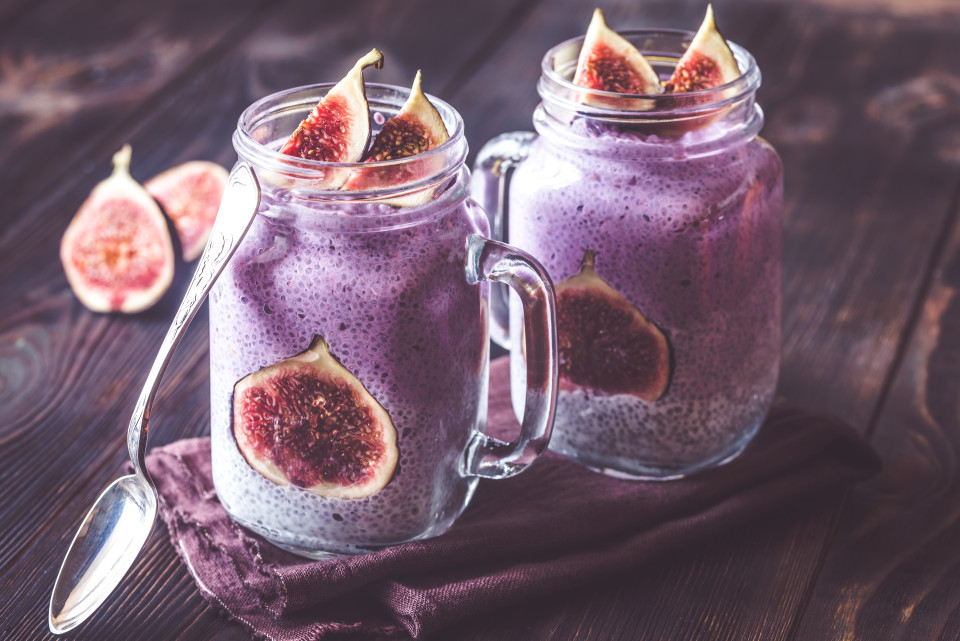
AI-generated food images are:
- not legally protectable, as there is no copyright holder
- legally uncertain
- problematic in commercial and medical contexts
- often visually unnatural
Professional recipes need visual credibility—not synthetic aesthetics.
4. How we consciously categorize AI recipes at Cookbutler
We use AI where it provides meaningful support – not where it suggests responsibility. For us, AI is a tool within clearly defined boundaries, not a replacement.
AI supports us with:
- internal processes
- editorial efficiency
- linguistic scaling
- operational acceleration
AI does not replace:
- recipe development
- medical logic
- nutritional responsibility
- liability
- licensed data
- real food photography
Cookbutler’s quality lies in the system – not in the prompt.
Conclusion: AI recipes need clear boundaries
Artificial intelligence will accompany recipe development – but it will not replace it. AI reaches its limits precisely where recipes must be medically relevant, legally compliant, scalable, licensable, and economically viable.
Cookbutler stands for:
- Real, cooked, and tested recipes
- Structured, scalable data
- Licensed content
- Human creativity
- Medically sound logic
- AI as a tool – not a replacement for responsibility
What is your experience with AI? We look forward to discussing it with you!